Understanding Cooling Systems (Part 3): AHU, Clean Rooms and Controlled Environments

Introduction

Cooling is not always about making a space colder.

In many industries, customers need much more than temperature reduction.

They require:

  • Stable temperature control
  • Humidity management
  • Clean air conditions
  • Precise environmental control

This is why systems such as chillers, AHUs, and clean rooms are widely used in modern industrial applications.

AHU, Clean Rooms and Controlled Environments: When Cooling Is More Than Temperature Reduction

After learning about cold storage systems and chillers, another important concept becomes clear:

Not every cooling project is simply about making a space colder.

Many industries need something beyond basic cooling.

They need:

  • Stable temperature
  • Controlled humidity
  • Clean air
  • Precise environmental conditions

This is where systems such as AHU (Air Handling Unit) and Clean Rooms become important.

What Is an AHU (Air Handling Unit)?

AHU stands for:

Air Handling Unit.

During customer communication, one common misunderstanding I encountered was that some people considered an AHU as a cooling machine.

Actually, an AHU is not the cooling source.

It is an air treatment and distribution system.

An AHU is responsible for:

  • Air circulation
  • Air filtration
  • Temperature adjustment
  • Humidity control
  • Air distribution

The cooling energy usually comes from another system, such as a chiller.

The relationship between them is:

				
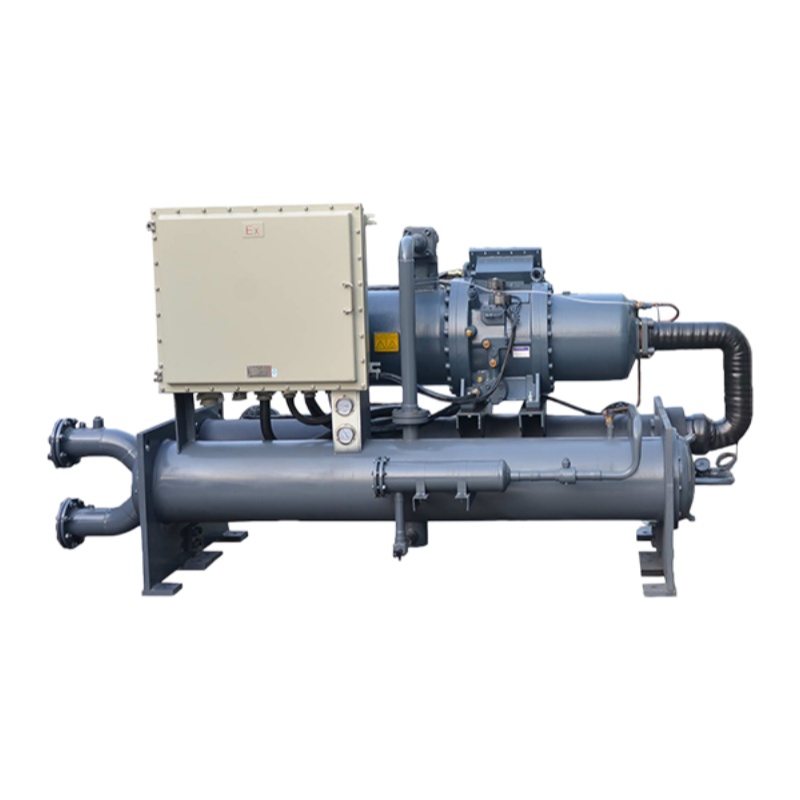
					              Chiller
              │
              │ Chilled Water
              ↓
             AHU
              │
              │ Conditioned Air
              ↓
          Building / Room


Simply explained:

The chiller produces cooling energy.

The AHU uses that cooling energy to treat and distribute air.

Chiller and AHU: How They Work Together

A typical chilled water HVAC system works like this:

  1. The chiller cools water.
  2. Pumps circulate chilled water to the AHU.
  3. The AHU uses chilled water to cool and treat air.
  4. The conditioned air is supplied into the room.

The system can be represented as:

				
					       Chiller
    ↓
Chilled Water
    ↓
   AHU
    ↓
Filtered & Conditioned Air
    ↓
Indoor Environment


This type of system is widely used in:

  • Commercial buildings
  • Hospitals
  • Laboratories
  • Clean rooms
  • Industrial facilities

Cold Room vs Clean Room: They Solve Different Problems

Another area where customers sometimes confuse concepts is:

Cold Room vs Clean Room

Although both involve environmental control, their purposes are completely different.

A cold room mainly focuses on:

  • Product temperature
  • Preservation
  • Storage conditions

A clean room focuses on:

  • Air cleanliness
  • Temperature stability
  • Humidity control
  • Pressure control

The goal is different.

A cold room asks:

“How can we keep this product at the required temperature?”

A clean room asks:

“How can we maintain a controlled environment with minimal contamination?”

Cold Room vs Clean Room Comparison

Cold Room

Clean Room

Main Purpose

Product preservation

Controlled manufacturing environment

Main Concern

Temperature

Temperature + humidity + cleanliness

Cooling Method

Refrigeration system

Usually chiller + AHU system

Typical Applications

Food, pharmaceutical storage

Semiconductor, medical, pharmaceutical production

Air Requirement

Normal air circulation

Filtered and controlled air

What Is a Clean Room?

A clean room is a specially designed environment where airborne particles and environmental conditions are controlled.

Typical applications include:

  • Pharmaceutical manufacturing
  • Medical production
  • Semiconductor manufacturing
  • Laboratory research
  • Precision industries

A clean room system usually requires multiple systems working together:

				
					              Chiller
          ↓
      Chilled Water
          ↓
         AHU
          ↓
     Filtration System
          ↓
      Clean Room


The chiller provides cooling.

The AHU manages air.

The filtration system controls cleanliness.

Together, they maintain the required environment.

Temperature and Humidity Controlled Rooms

Besides cold rooms and clean rooms, another application often appears in industrial projects:

Temperature and Humidity Controlled Rooms.

These spaces are designed for situations where environmental stability is critical.

The goal is not only cooling.

It is maintaining precise conditions.

Typical applications include:

  • Testing laboratories
  • Research facilities
  • Product testing rooms
  • Precision manufacturing
  • Environmental simulation rooms

These systems may need to control:

  • Temperature
  • Humidity
  • Airflow
  • Air quality

Depending on the application, the system may include:

  • Chiller
  • AHU
  • Heating system
  • Humidification equipment
  • Dehumidification equipment
  • Control system

Does a Temperature and Humidity Controlled Room Always Need a Chiller?

Not always.

The equipment selection depends on:

  • Required temperature range
  • Room size
  • Accuracy requirements
  • Heat load
  • Application purpose

For many industrial and large-scale applications, a chiller is commonly used because it provides stable cooling capacity.

The AHU then manages:

  • Air distribution
  • Temperature adjustment
  • Humidity control

The relationship is:

				
					       Cooling Source
          ↓
        Chiller
          ↓
     Chilled Water
          ↓
         AHU
          ↓
 Controlled Environment


Other Spaces That May Require Chillers

A common question from customers is:

“Where are chillers used besides air conditioning?”

In fact, chillers are widely used in many industries.

Examples include:

Manufacturing Facilities

Used for:

  • Injection molding machines
  • Laser equipment
  • CNC machines
  • Production processes

Purpose:

Maintain equipment temperature and improve production stability.

Data Centers

Used for:

  • Server cooling
  • Heat removal

Purpose:

Maintain reliable operation of electronic equipment.

Medical and Pharmaceutical Facilities

Used for:

  • Laboratories
  • Production areas
  • Storage environments

Purpose:

Provide precise temperature control.

Commercial Buildings

Used for:

  • Central air conditioning systems

Purpose:

Provide cooling for large spaces.

Food Processing Industry

Used for:

  • Production cooling
  • Process water cooling
  • Storage systems

Purpose:

Maintain food safety and production efficiency.

Understanding Cooling Systems as Complete Solutions

After understanding these different applications, one thing becomes clear:

Condensing units, air coolers, chillers, AHUs, and clean rooms are not separate concepts.

They are connected parts of the broader cooling industry.

A simple relationship looks like this:

				
					Cooling Requirement
                 ↓
 What Needs To Be Cooled?
                 ↓
 ┌───────────────┬───────────────┐
 │               │               │
Product          Equipment       Environment
 │               │               │
 ↓               ↓               ↓
Refrigeration    Chiller         Chiller
System           System          + AHU
 │               │               │
 ↓               ↓               ↓
Cold Room       Process          Clean Room
                Cooling          Control


For a refrigeration sales professional, understanding these relationships is more important than memorizing equipment names.

Because customers usually describe their problems, not the technical solution.

Our role is to connect the customer's requirement with the correct cooling system.

Conclusion

To be continued...

In the final article, we will explain:

  • How to develop a customized chiller solution;
  • What information customers need to provide;
  • How cooling requirements are transformed into technical solutions;
  • How JECICOOL helps customers solve real cooling challenges.

Continue reading:

Understanding Cooling Systems (Part 4): From Customer Requirements to Customized Chiller Solutions

Share This Article:

Leave a Reply